CLIPPY
Something strange was happening at Microsoft. The company had decades of beloved products and cultural icons, but internally, there was a reflex to run the other way. Leadership was fixated on being seen as "cutting edge," and anything tied to Microsoft's past was treated as a liability. Nowhere was this starker than with Clippy, the animated paperclip everyone told me to stop asking about.
Year
2022
Role
Creative Director
Timeline
2 years
Recognizing the Opportunity
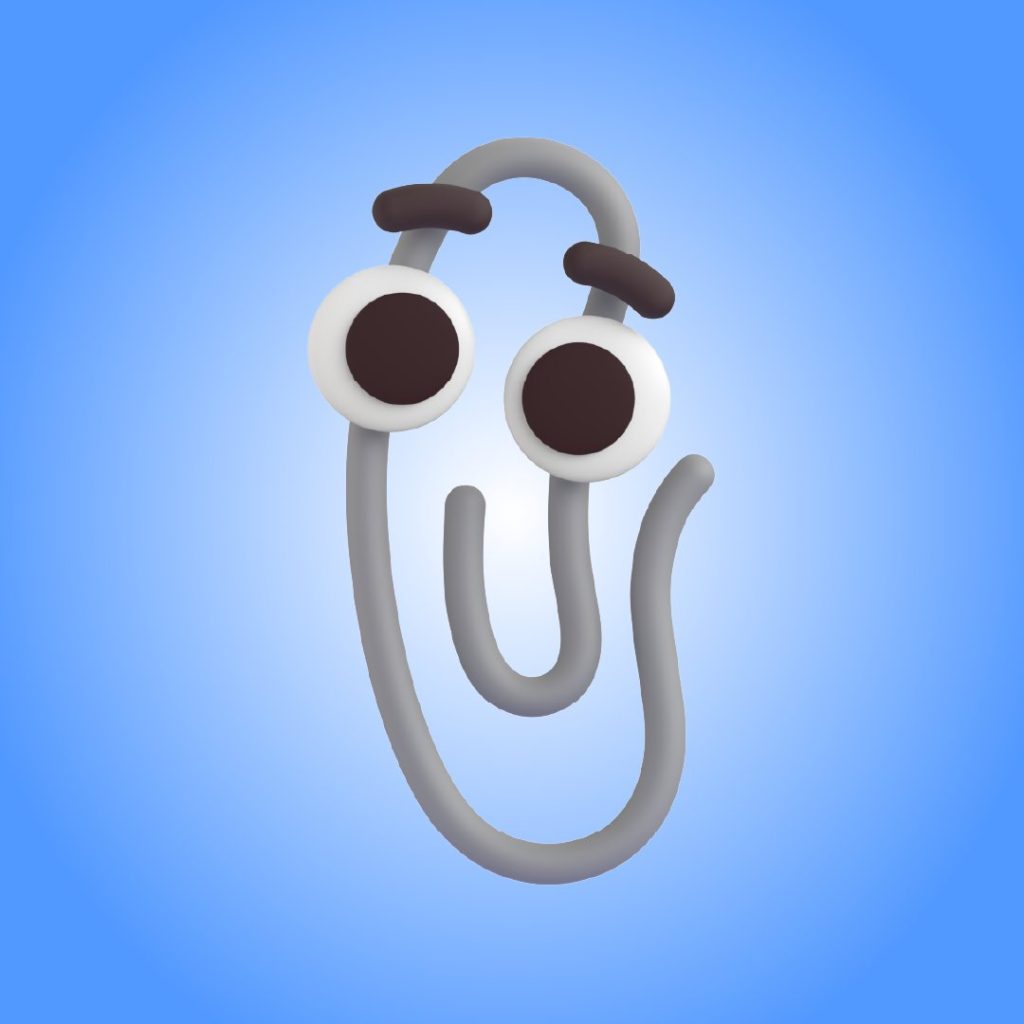
When I joined Microsoft, it didn't take long to notice: leadership hated Clippy. It didn't help there was an infamous rumored memo from Bill Gates entitled "Clippy Must Die" (though the veracity of that claim is disputed). To the old guard, Clippy symbolized software bloat and overcomplicated interfaces. I mean, Google didn't need a paperclip to tell you how to use their products. But I saw it differently. Trust in tech companies was eroding and nostalgia was everywhere. I knew leaning into our history, and specifically Clippy, could be a win. The "software bloat" baggage was long gone. Twenty years later, Clippy was just a cute—and amusingly polarizing—paperclip. But my attempts to use Clippy were shut down immediately. The stock answer of "no" was too ingrained, and the product teams wanted nothing to do with it. So I changed my approach: instead of going straight for Clippy, I'd prove the nostalgia strategy with easier bets first.
Proving the Strategy and Building the Case
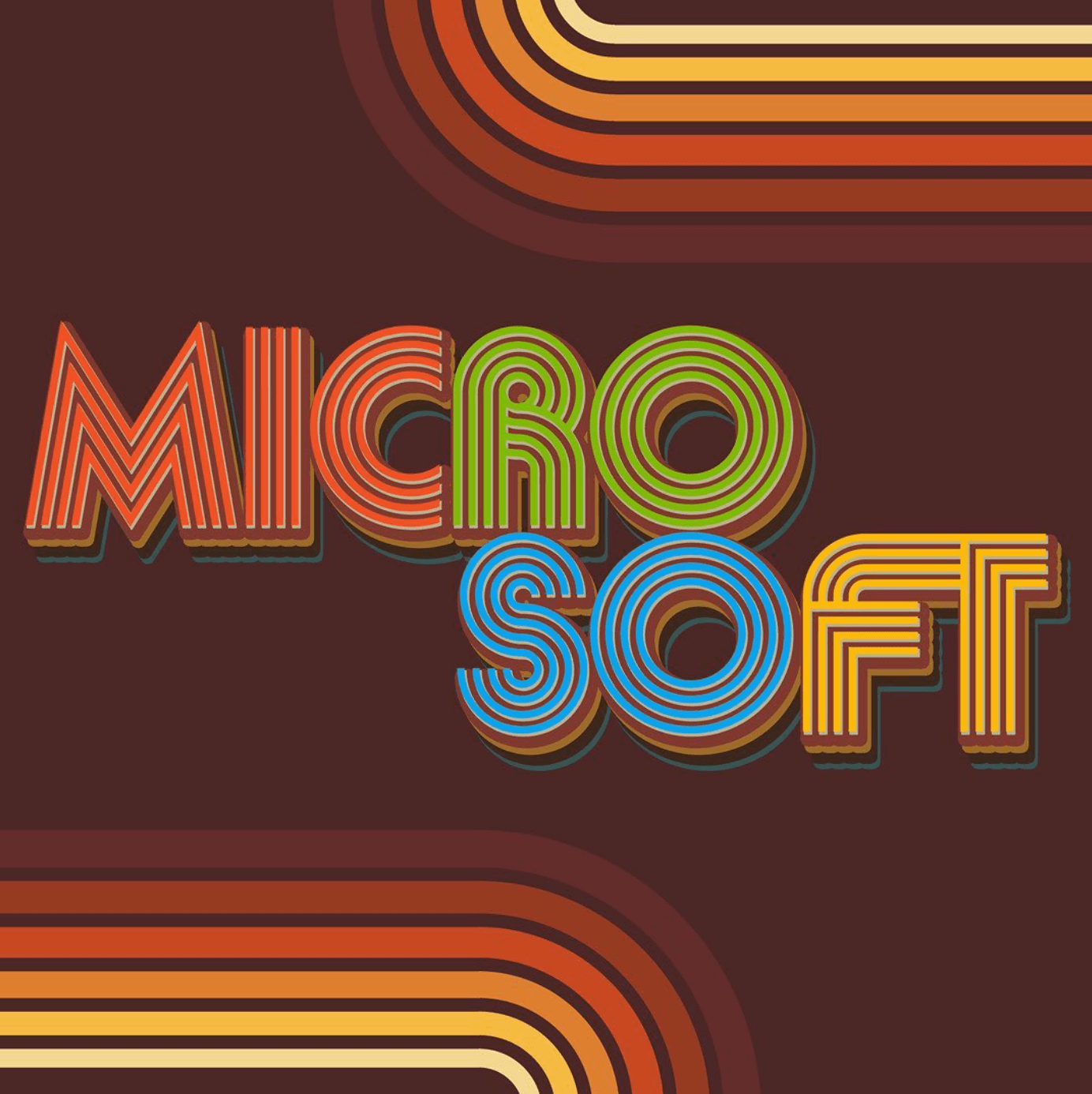
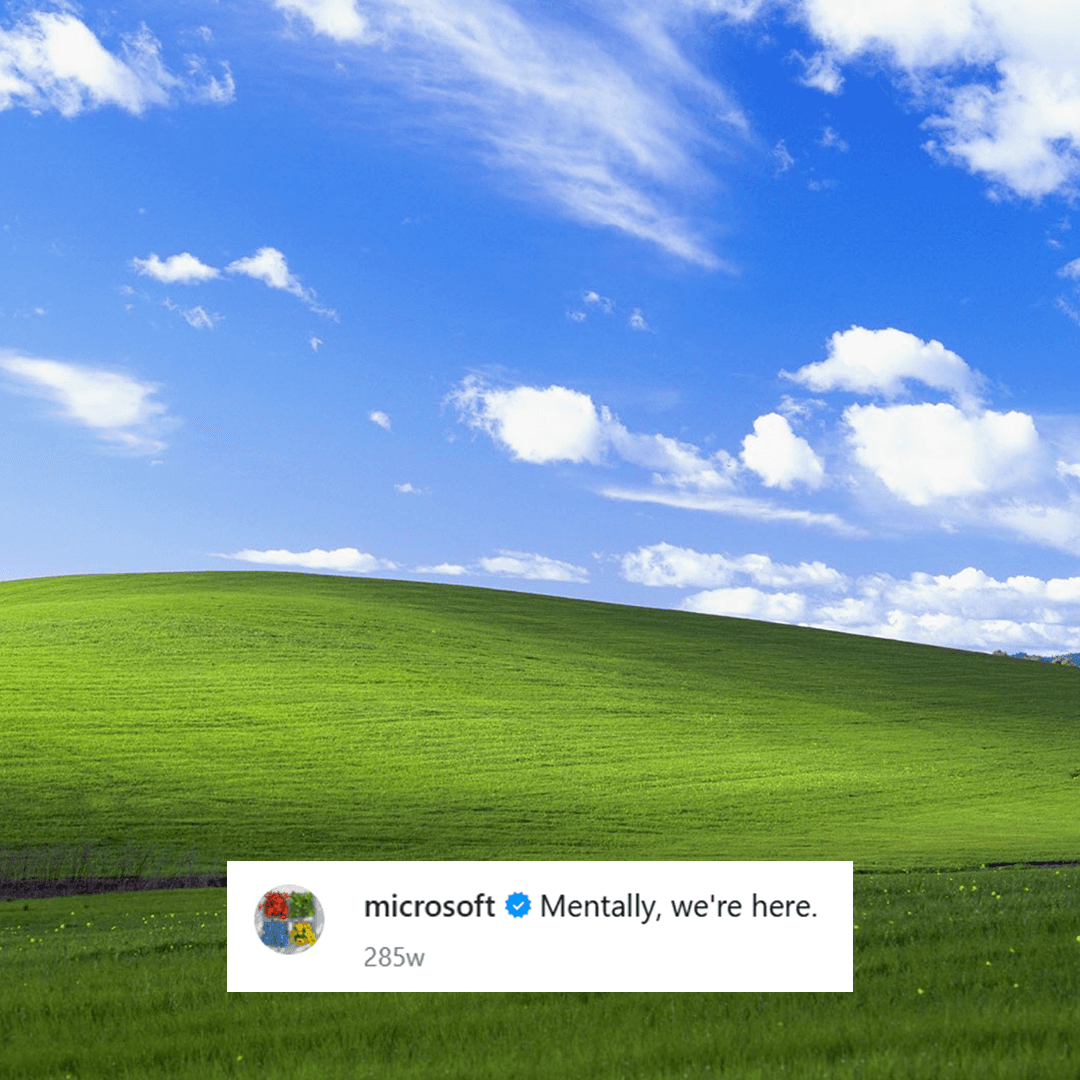
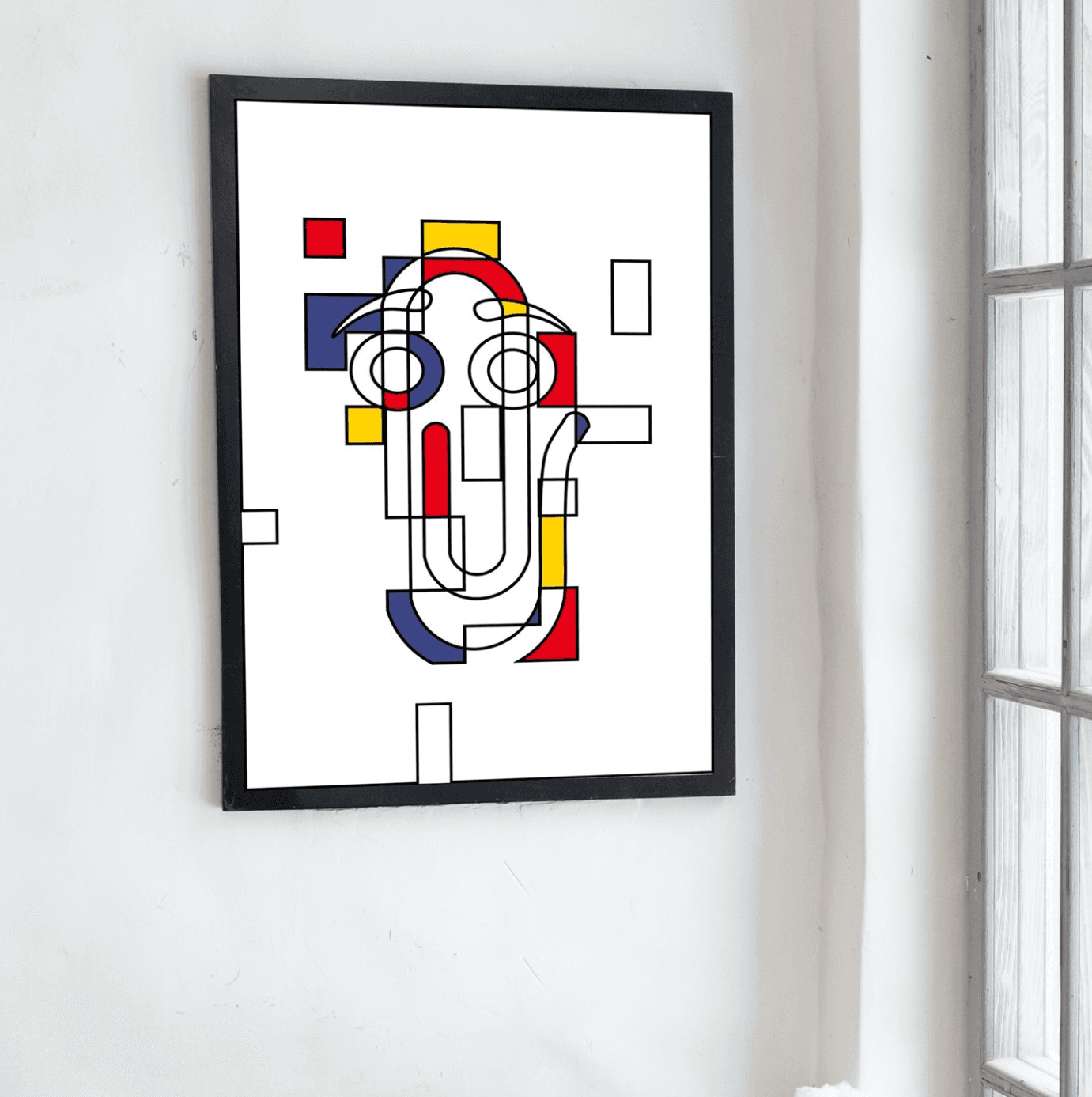
Working closely with our social strategist who was my partner on the project, we started weaving nostalgic content into the mix, including Solitaire, Minesweeper, and the iconic "Bliss" hill background from Windows XP. The instinct was right. These posts broke records. A simple photo of the Bliss hill with the caption "mentally, we're here" became Microsoft's most-liked Instagram post in history. But we also noticed something bigger: these viral nostalgia posts were creating a halo effect. The content posted immediately before and after a big nostalgic hit saw massive upticks in views and engagement. We had a theory, so we commissioned our social agency to run the numbers. The data confirmed it: nostalgia content wasn't just performing by itself. It was boosting the algorithm for everything around it. We turned that insight into a strategy. We started sandwiching important, cutting-edge stories like product launch announcements between nostalgic content we knew would get eyeballs. The viral posts pulled people in, and the algorithm rewarded the content that followed. Eventually, we had enough proof to go back to leadership. We presented the nostalgia data, the halo effect, and even some spec Clippy content we'd created so executives could actually envision it. We got approval.
Organizational Impact and Cultural Shift
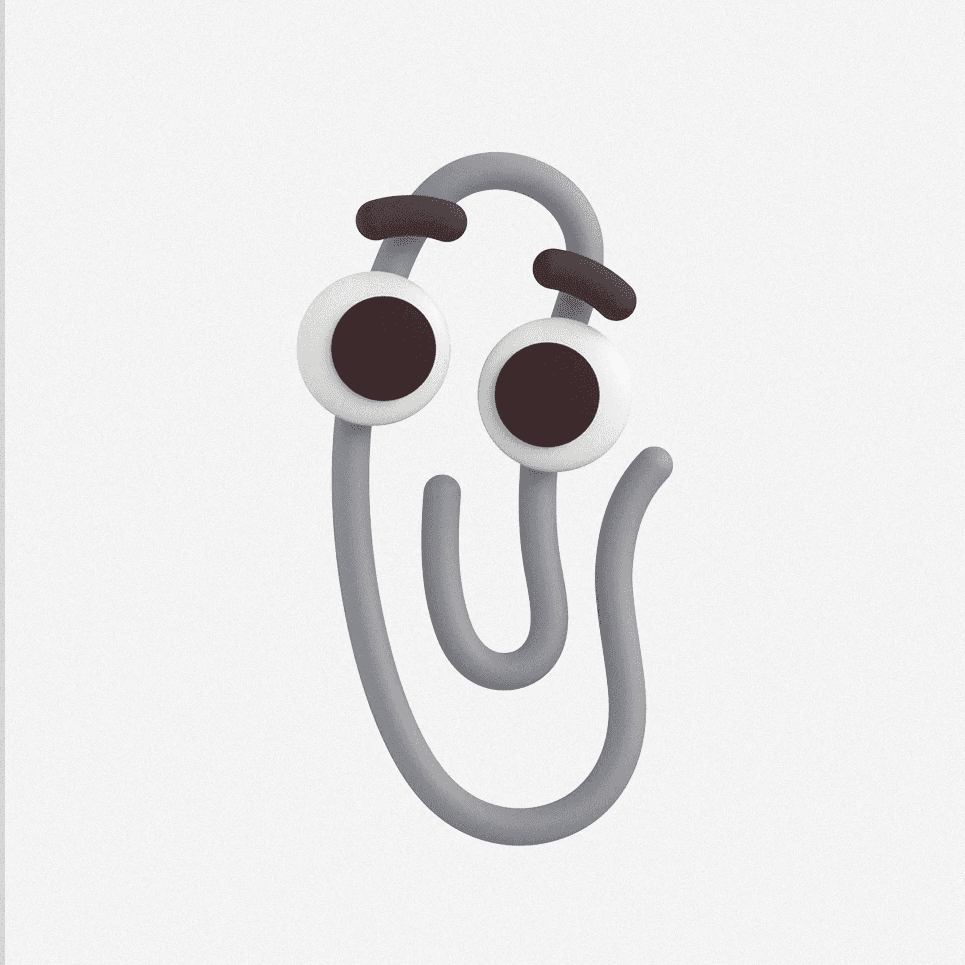
And Clippy delivered. The posts were as popular and polarizing as ever. Even the Clippy haters were having fun talking trash. This success spread beyond our team and beyond our content. Clippy became a mascot costume for our TikTok channel, our own version of the Duolingo owl. When Windows refreshed its emoji collection, the paperclip emoji gained a pair of eyes, marking the first time Clippy was reintroduced into a product in 20+ years. And now, our latest AI technology, Copilot, has an Easter egg that lets you turn it into Clippy. As other teams started using Clippy, I was asked by the global brand team to create a framework for how the company should deploy it. We sought to answer questions like "Does Clippy have a voice?" and "What pronouns do we use?" (The answer: it/its.) That guidance became key, as it drove alignment across an organization that was utilizing the character more and more. The results weren't just individual viral moments. Twitter engagement went up 800% year over year. We added over 200,000 new Twitter followers in two years, grew Instagram from 340K to 618K followers, and added 3 million new LinkedIn followers in a single fiscal year. More importantly, we shifted how Microsoft thought about its own history. Someone once told me that working at Microsoft is like driving the Titanic: you turn the wheel as hard as you can, and a year or two later, you see if it did anything. We turned the wheel. We made the content, built the case, proved the strategy, and waited. And yes, about a year later, we could see that we'd successfully moved something. We proved that nostalgia content can live alongside cutting-edge technology and that the trust built by our long-standing position in people's lives is an asset, not something to hide from.